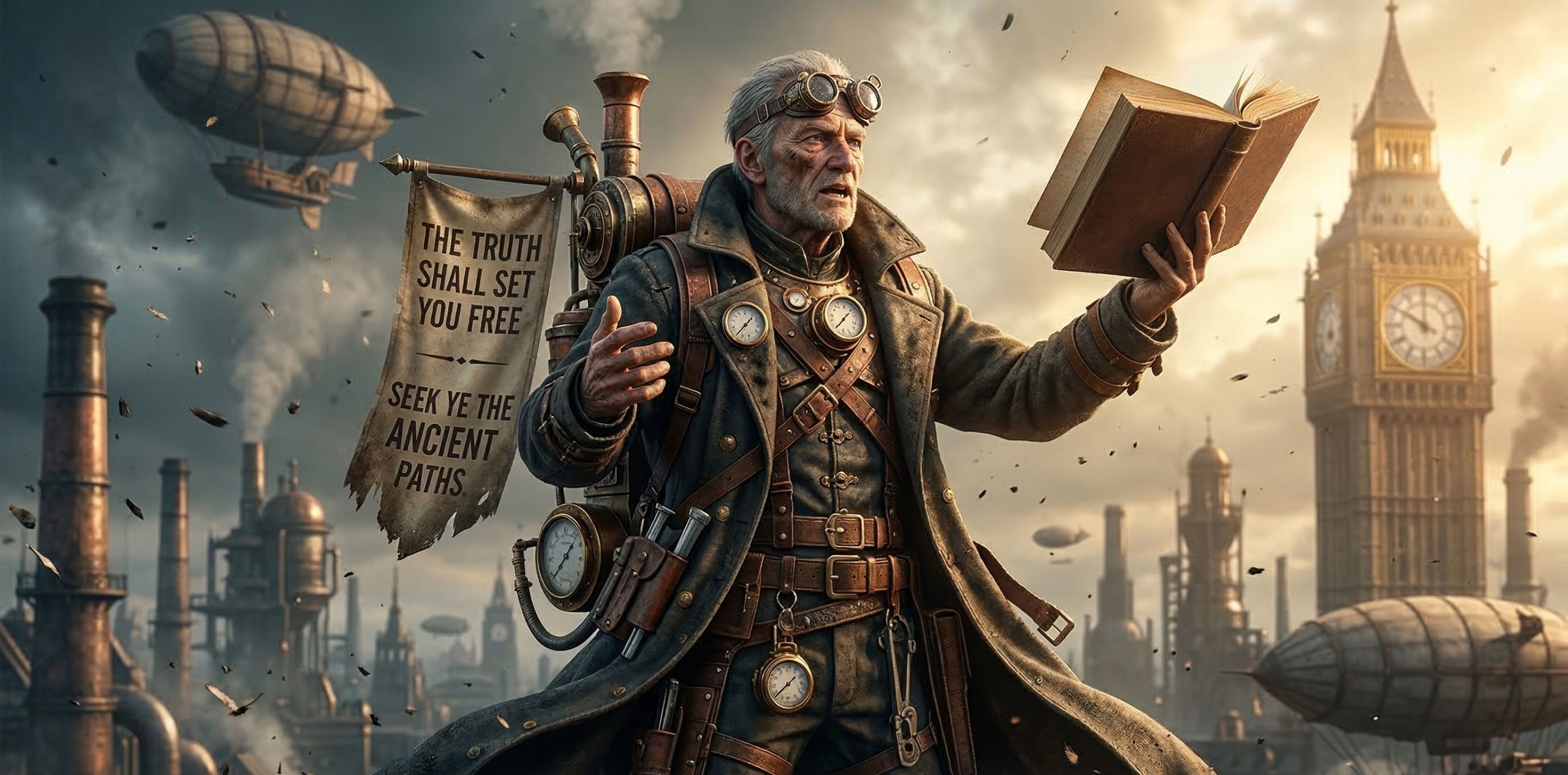
There is a tendency in modern marketing conversations to treat organic growth as a relatively new concept — something that emerged with content strategy, SEO, and social media. But the principles behind it are far older than the internet. The businesses that built durable reputations before digital channels existed did so through word of mouth, community presence, consistent delivery, and a clear identity that people could articulate to others. The local solicitor who had a three-decade reputation on the high street, the hardware store whose owner knew every tradesperson in the suburb by name, the accounting firm whose clients referred because the work was simply excellent — these were all organic growth engines. The medium has changed dramatically. The underlying mechanism has not.
Before paid media became accessible at scale, businesses earned attention through proximity and proof. You were visible because you showed up in person — at industry events, in the local chamber of commerce, in the community groups where your potential clients spent time. You built trust not through advertising but through repeated, reliable demonstration of competence. Reputation compounded slowly and stuck permanently. One of the most important structural differences between this era and the present is that negative reputation was equally durable — a bad experience spread through a community and stayed there. This created an accountability loop that the best businesses internalised as a genuine competitive discipline. Getting things right for existing customers was, quite literally, the marketing strategy.
“According to BrightEdge research, organic search still drives 53% of all website traffic — making it the highest-performing marketing channel available to businesses today.”
What digital channels did was not replace this logic — it scaled it. A well-written article that genuinely answers a question your prospective client is searching for is the modern equivalent of the authoritative business owner holding court at a industry breakfast. A consistently maintained social presence that shows real work, real results, and real personality is the digital equivalent of being known in your suburb. The businesses that understood this earliest — companies like HubSpot, who built an entire acquisition engine on educational content rather than interruptive advertising — demonstrated that the compound effect of organic credibility works at internet scale too. HubSpot’s approach was rooted in a very old idea: give people something genuinely useful for free, and they will come to trust you enough to eventually buy.
The challenge for most SMEs today is patience. Paid advertising offers an immediate feedback loop — spend money, get impressions, measure results, adjust. Organic marketing operates on a fundamentally different timeline. Content needs to be indexed, shared, linked to, and discovered. A social audience needs to be built over months of consistent posting before it generates meaningful inbound. That slower cycle feels uncomfortable in a business environment that is used to measuring marketing in weeks. But the economics over a longer horizon are compelling: organic assets continue generating traffic and leads without ongoing spend, while paid traffic stops the moment the budget stops. Businesses that invest in organic alongside paid are building an asset; those that run only paid are effectively renting attention indefinitely.
The most effective marketing strategies today draw on both traditions simultaneously. They use paid channels to accelerate reach and test messaging quickly, and organic channels to build the underlying credibility that makes paid conversion cheaper over time. The businesses that compound fastest are the ones that treat every piece of content, every client interaction, and every public-facing communication as a brick in a reputation that is being constructed deliberately. That is not a new idea. It is the oldest idea in commerce, translated into a new medium. The businesses that understood it before the internet existed built things that lasted decades. The ones that understand it now, and act on it consistently, are building the same kind of durable advantage — just at a speed and scale that was previously unimaginable.